
Process
From field to finished print.
The work begins in remote New Zealand landscapes, but the final image is shaped through every decision that follows: the camera, the paper, the ink, the mount, the glass and the frame.
Camera
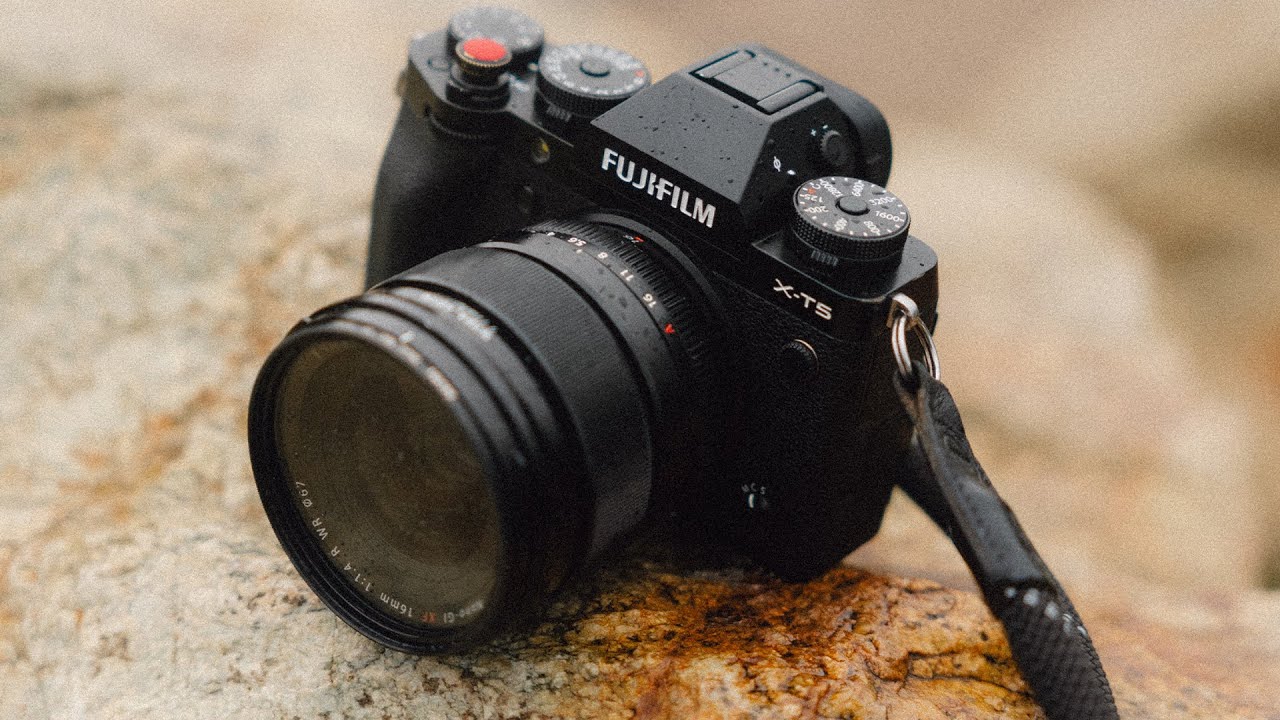
Fujifilm X-T5
Christopher photographs New Zealand's wilderness using the compact yet powerful Fujifilm X-T5, chosen for its exceptional detail, weather sealing and legendary colour science.
Christopher works extensively within the Fujifilm ecosystem and currently shoots with the Fujifilm X-T5. Not because it is the newest shiny toy dangling from a camera store shelf whispering sweet nothings to one's wallet, but because after years of hauling gear through rivers, alpine scree, freezing valleys and enough DOC campsites to qualify as semi-homeless, one starts to appreciate equipment that does not feel like carrying a concrete mixer strapped to your spine.
The beauty of the X-T5 is that it hits that rather magical sweet spot between professional image quality and practical survival. It is compact enough to disappear into a backpack already overloaded with overnight gear, spare thermals, questionable snack choices and the kind of emergency coffee supplies one should probably not admit to publicly. Yet despite its modest size, the camera punches well above its weight.
That 40.2 megapixel sensor means Christopher can capture landscapes with more than enough detail. Christopher prefers to frame his images properly in-camera rather than relying heavily on cropping later, making full use of the X-T5's resolution and allowing the final image to retain every ounce of sharpness, texture and atmosphere captured in the moment.
Then there is Fujifilm's colour science, which, to put it bluntly, is witchcraft. The famous Fujifilm film simulations produce colours that somehow feel rich and cinematic without looking fake or overcooked. Velvia in particular can make alpine greens, icy blues and golden evening light sing straight out of camera with very little editing required afterwards.
Another reason Christopher keeps returning to the X-T5 is its weather sealing. Cameras and New Zealand landscapes tend to have a somewhat hostile relationship. Rain appears sideways, frost creeps into everything, and mountain weather changes faster than social media trends. The X-T5 handles dust, moisture and freezing temperatures with the sort of calm resilience one wishes humans possessed.
Although on occasion Christopher still pulls out his old Nikon FM2, originally purchased back in 1982 when he first began his School of Design studies. There is no instant playback, no zooming in to check focus, and no firing off hundreds of images just to delete them later. One has to actually think about framing, light and exposure before pressing the shutter.
Fine Art Prints
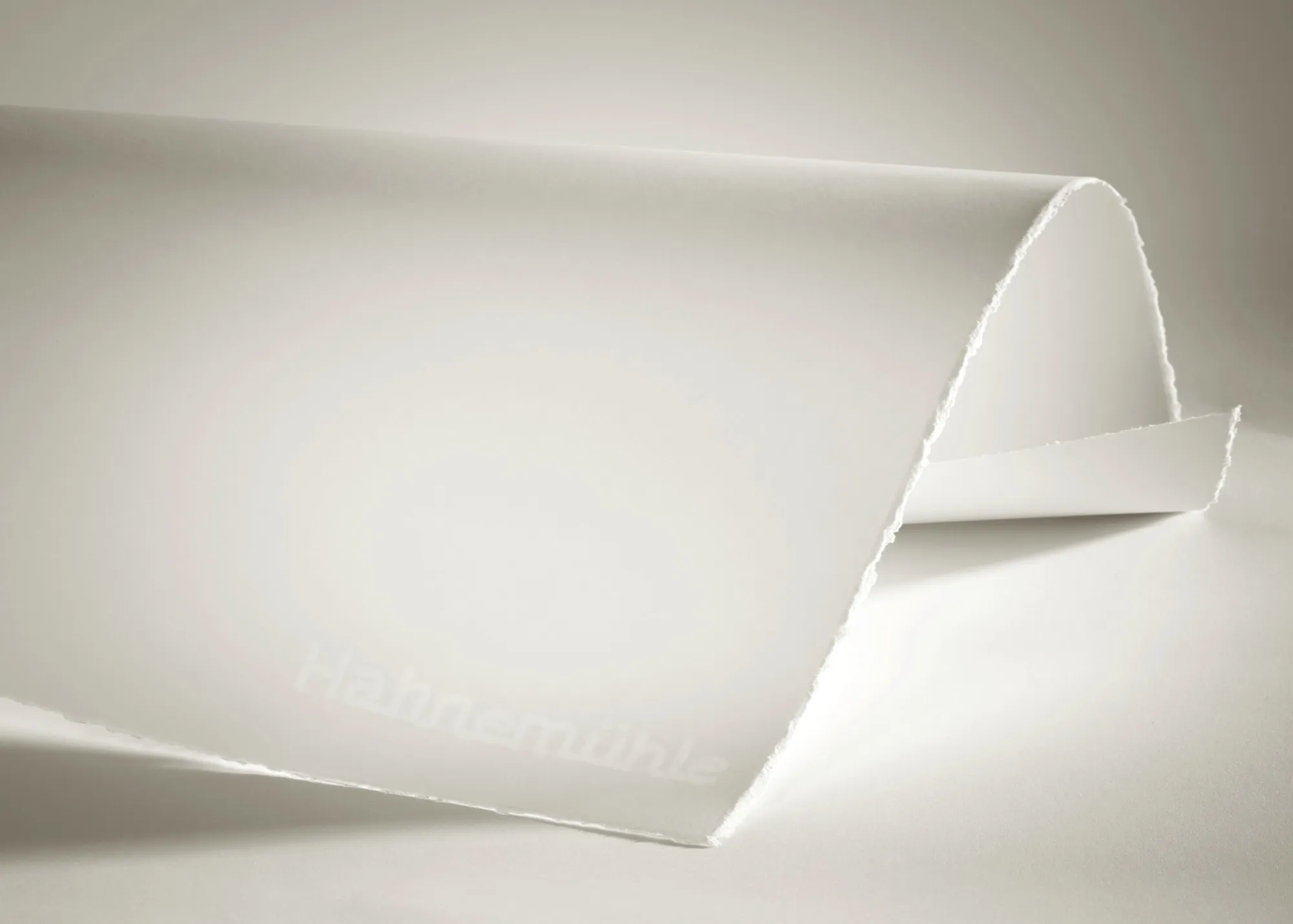
Archival Hahnemuhle Photo Rag
Every OHNZ fine art print is produced using professional archival printing processes designed to preserve the atmosphere, colour and detail captured in the original image.
Printed on an Epson SureColor using premium pigment-based archival inks, each print is created to deliver exceptional depth, tonal range and long-term fade resistance.
OHNZ Photography prints exclusively on Hahnemuhle Photo Rag 308gsm, widely regarded as one of the world's finest papers for museum-quality FineArt printing. Made from 100% cotton rag, the paper features a beautifully soft matte surface with a subtle felt texture that adds both depth and character to the final artwork.
The combination of the paper's natural texture and the richness of pigment inks produces prints with remarkable clarity, deep blacks, soft tonal transitions and outstanding detail reproduction. Colours remain vibrant yet natural, while the matte finish allows the landscape and light within the image to speak without distraction.
Acid and lignin free, Hahnemuhle Photo Rag 308gsm is specifically designed for archival FineArt applications, offering exceptional longevity and ensuring each print is created to stand the test of time. When professionally framed with UV70 protective glass, the prints offer archival quality longevity for up to 100 years under proper display conditions.
Whether displayed in a home, gallery or private collection, every OHNZ fine art print is produced with the intention of preserving not just the image itself, but the feeling of standing there within the landscape when the shutter was released.
Frame and Mount
Handcrafted Frames
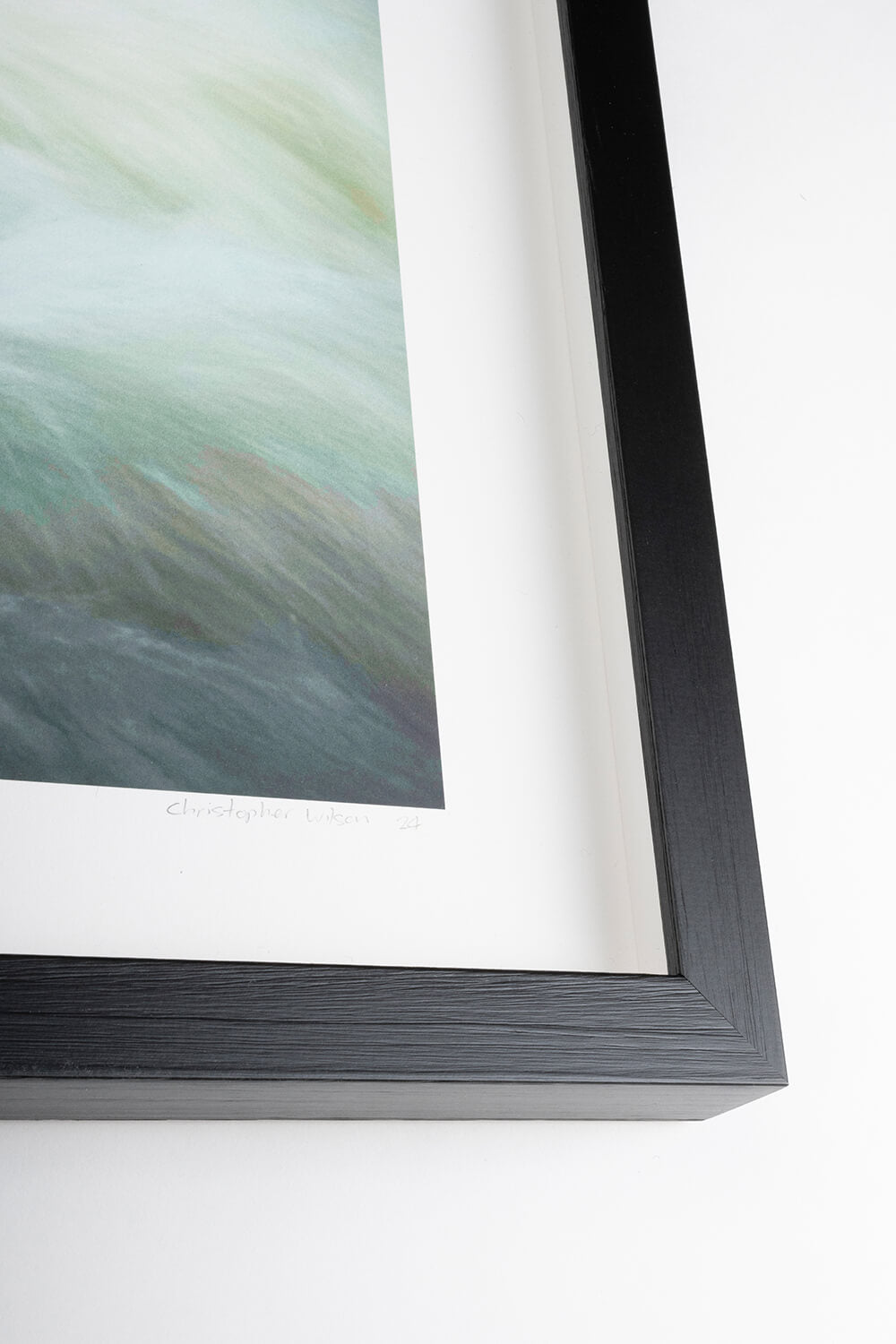
Handcrafted in Nelson using archival mounting techniques, premium UV70 non-reflective glass and kiln-dried timber frames, every OHNZ framed print is designed for long-term display quality.
Every OHNZ framed print is professionally handcrafted in Nelson, New Zealand by the team at Nelson City Framers. Built using kiln-dried pine for strength, stability and longevity, each frame is designed to complement the artwork without overpowering it.
Finished in a timeless grained black, the frame profile measures 26mm wide x 40mm deep, creating a refined balance of depth, simplicity and presence. The clean contemporary finish allows the landscape, light and atmosphere within the image to remain the true focal point while still giving the artwork a strong architectural presence within the space it occupies.
Each fine art print is professionally mounted onto acid-free, neutral pH foam board to ensure long-term archival preservation and structural stability. Museum-grade mounting materials help protect the print from discolouration, deterioration and warping over time.
Every limited edition framed print is protected using premium UV70 non-reflective glass. This specialised glass filters out approximately 70% of harmful ultraviolet light, reducing the risk of fading while minimising glare and unwanted reflections.